s3 amazonaws com
Sarah Green
s3 amazonaws com is a domain commonly encountered by users interacting with Amazon Web Services (AWS), particularly when working with Amazon S3 (Simple Storage Service). Amazon S3 is a highly scalable, durable, and secure cloud storage service that enables businesses and developers to store and retrieve any amount of data at any time. The URL pattern involving s3.amazonaws.com is integral to how users and applications access stored data within the AWS ecosystem. Understanding the nuances of this domain, how it functions, and best practices for its usage can significantly enhance your cloud storage strategies and ensure optimal performance and security.
What is Amazon S3?
Amazon S3 is a cloud storage platform designed to provide scalable object storage for a wide variety of use cases, including website hosting, data archiving, backup and restore, enterprise applications, and big data analytics. It is part of the broader AWS cloud computing platform and is renowned for its simplicity, security, and cost-effectiveness.
Key Features of Amazon S3
- Scalability: Automatically scales to accommodate growing data needs without requiring infrastructure changes.
- Durability: Designed for 99.999999999% (11 nines) durability by redundantly storing data across multiple facilities.
- Security: Offers multiple layers of security, including encryption, access control policies, and audit logs.
- Accessibility: Data stored in S3 can be accessed via REST APIs, SDKs, or the AWS Management Console.
Understanding the s3.amazonaws.com Domain
The domain s3.amazonaws.com is the primary endpoint for accessing Amazon S3 resources globally. When you create a bucket or upload objects, the URL often takes the form:
- `https://s3.amazonaws.com/bucket-name/object-key`
Alternatively, AWS also supports virtual-hosted style URLs:
- `https://bucket-name.s3.amazonaws.com/object-key`
This domain is part of Amazon's global infrastructure, designed to route requests efficiently and securely.
How Does s3.amazonaws.com Work?
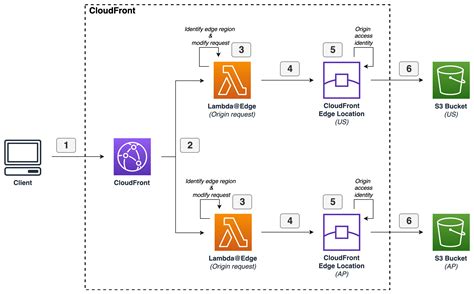
When a user or application requests data via s3.amazonaws.com, the request is routed through Amazon's Content Delivery Network (CloudFront) and global edge locations, ensuring low latency and high availability. The request specifies the bucket name and object key, which AWS resolves internally to retrieve the desired data.
Why Use s3.amazonaws.com?
- Universal Access: It provides a consistent endpoint for accessing S3 buckets across regions.
- Compatibility: Many third-party tools and SDKs are optimized to work seamlessly with this domain.
- Simplicity: Using this URL pattern simplifies programmatic access and scripting.
Accessing Data on s3.amazonaws.com
Accessing objects stored in Amazon S3 via the s3.amazonaws.com domain can be done through various methods depending on your needs—public access, authenticated requests, or presigned URLs.
Public Access
If your objects are set to be publicly accessible, you can access them directly via a URL like:
```
https://s3.amazonaws.com/bucket-name/object-key
```
or
```
https://bucket-name.s3.amazonaws.com/object-key
```
Authenticated Access
For private objects, you need to authenticate your requests using AWS credentials. This can be achieved through:
- AWS SDKs (e.g., Boto3 for Python, AWS SDK for Java)
- AWS CLI commands
- Signed URLs (presigned URLs)
Using Presigned URLs
Presigned URLs generate time-limited access to private objects, allowing users to share access securely without exposing credentials. Example:
```
https://bucket-name.s3.amazonaws.com/object-key?X-Amz-Algorithm=AWS4-HMAC-SHA256&X-Amz-Credential=...
```
These URLs are generated via AWS SDKs and are valid only for a specified duration.
Best Practices for Using s3.amazonaws.com
To optimize your use of Amazon S3 and s3.amazonaws.com, consider the following best practices:
- Use Virtual-Hosted Style URLs
- Prefer `https://bucket-name.s3.amazonaws.com/object` over path-style URLs for better compatibility and future-proofing.
- Implement Proper Access Controls
- Use IAM policies and bucket policies to restrict access.
- Enable bucket versioning for data protection.
- Enable server-side encryption for data at rest.
- Optimize Cost and Performance
- Use lifecycle policies to transition data to cheaper storage classes as needed.
- Enable Transfer Acceleration to speed up uploads and downloads over long distances.
- Monitor storage usage and access patterns via AWS CloudWatch.
- Secure Data Transmission
- Always use HTTPS to encrypt data in transit.
- Regularly rotate access keys and credentials.
- Use Presigned URLs for Secure Sharing
- Generate temporary URLs for sharing private objects.
- Set appropriate expiration times based on use case.
Common Use Cases for s3.amazonaws.com
Amazon S3 via s3.amazonaws.com supports a multitude of use cases, including but not limited to:
- Website Hosting
- Static websites can be hosted directly in S3 buckets, accessible via custom domains and CloudFront.
- Backup and Archiving
- Store backups of databases, applications, and documents securely and reliably.
- Data Analytics
- Store large datasets for analysis using services like AWS Athena or EMR.
- Content Delivery
- Serve images, videos, or other media content globally with low latency.
- Application Data Storage
- Enable applications to read/write data dynamically, such as user uploads or logs.
Troubleshooting Common Issues with s3.amazonaws.com
Despite its robustness, users may encounter issues when working with s3.amazonaws.com. Here are common problems and their solutions:
- Access Denied Errors
- Ensure IAM permissions and bucket policies allow the intended actions.
- Check object ACLs if objects are not publicly accessible.
- Object Not Found
- Verify the correct bucket name and object key.
- Confirm the object exists and has not been deleted or moved.
- Slow Uploads or Downloads
- Use Transfer Acceleration or multipart uploads for large files.
- Check network connectivity and latency.
- SSL/TLS Errors
- Ensure you're accessing via HTTPS.
- Update your client libraries to support current SSL protocols.
Conclusion: Maximizing Your Use of s3.amazonaws.com
The domain s3.amazonaws.com is a gateway to Amazon's powerful cloud storage capabilities. Whether you're hosting static websites, backing up critical data, or serving media content, understanding how to properly utilize this domain is essential. By following best practices for security, access management, and performance optimization, you can ensure that your data remains safe, accessible, and cost-effective.
As AWS continues to evolve, staying current with features like new storage classes, enhanced security options, and integration with other AWS services will enable you to leverage Amazon S3 and s3.amazonaws.com to their fullest potential. Whether you're a developer, system administrator, or business owner, mastering the ins and outs of this domain and the underlying service can significantly enhance your cloud storage strategy.
Keywords: s3.amazonaws.com, Amazon S3, cloud storage, AWS, object storage, data security, presigned URLs, static website hosting, cloud backup, scalable storage
s3.amazonaws.com is a fundamental component of Amazon Web Services (AWS), serving as the primary endpoint for Amazon Simple Storage Service (S3). As one of the most widely adopted cloud storage solutions globally, Amazon S3 has revolutionized how individuals, businesses, and organizations store, manage, and access data in the cloud. Its seamless scalability, durability, and security features make it an essential tool for a diverse range of applications—from hosting static websites to backing up critical enterprise data. In this comprehensive review, we will explore the core features, benefits, drawbacks, and practical use cases of s3.amazonaws.com, providing an in-depth understanding of its role in modern cloud infrastructure.
Understanding Amazon S3 and the Role of s3.amazonaws.com
Amazon S3 (Simple Storage Service) is a scalable, high-speed, web-based cloud storage service designed for storing and retrieving any amount of data at any time. The endpoint s3.amazonaws.com acts as the default URL through which users access their stored data, manage buckets, and execute API calls. This URL structure is fundamental to how S3 integrates with applications via RESTful APIs, SDKs, and third-party tools.
Amazon S3 organizes data into "buckets," which are container units for objects—files and their metadata. Each object stored in S3 is identified by a unique key within its bucket, and the data can range from small text files to large multimedia assets. The s3.amazonaws.com endpoint is globally accessible, providing a consistent interface for data operations across regions.
Core Features of s3.amazonaws.com and Amazon S3
Amazon S3's extensive feature set is designed to meet the demanding needs of modern cloud storage, offering reliability, security, and flexibility.
1. Scalability and Performance
- Automatic scaling ensures that storage capacity expands seamlessly with your data needs.
- High throughput and low latency access to stored objects.
- Support for millions of requests per second, suitable for high-traffic applications.
2. Durability and Availability
- Designed for 99.999999999% (11 nines) durability.
- Data is automatically replicated across multiple facilities within an AWS region.
- Multiple storage classes (Standard, Intelligent-Tiering, Infrequent Access, Glacier, Deep Archive) allow optimization based on access patterns and cost.
3. Security and Compliance
- Supports encryption at rest (SSE-S3, SSE-KMS, SSE-C) and in transit (SSL/TLS).
- Fine-grained access controls via IAM policies, bucket policies, and Access Control Lists (ACLs).
- Integration with AWS CloudTrail for audit logging.
- Compliance certifications, including HIPAA, GDPR, SOC, and more.
4. Data Management and Lifecycle
- Lifecycle policies automate data archival and deletion.
- Versioning allows recovery of previous object versions.
- Cross-region replication (CRR) for disaster recovery and data sovereignty.
5. Integration and Ecosystem
- Compatible with numerous AWS services such as Lambda, CloudFront, and Athena.
- Supports custom domain names and static website hosting.
- REST API and SDK support enable programmatic control.
Advantages of Using s3.amazonaws.com as a Storage Endpoint
Amazon S3’s native endpoint s3.amazonaws.com offers several advantages that have contributed to its widespread adoption:
- Global Accessibility: The endpoint is accessible from anywhere with internet connectivity, facilitating easy data sharing and collaboration.
- Reliable Performance: Backed by AWS’s worldwide infrastructure, it offers dependable uptime and consistent performance.
- Ease of Use: Simple URL structure and robust SDKs make integration straightforward for developers.
- Cost-Effective: Pay-as-you-go model with tiered pricing ensures users only pay for what they use.
- Flexible Data Management: Multiple storage classes and lifecycle policies provide tailored solutions for diverse needs.
- Strong Security: Built-in encryption, access controls, and audit logging enhance data security.
Limitations and Challenges of s3.amazonaws.com
Despite its many strengths, relying on s3.amazonaws.com and Amazon S3 does come with some limitations:
- Cost Management Complexity: While economical at scale, costs can escalate unexpectedly with high request rates or data transfer, especially for egress.
- Latency for Global Access: Although generally fast, latency can vary depending on geographical distance from the AWS region hosting the data.
- Data Transfer Costs: Inbound data is usually free, but outbound data transfer can incur significant charges.
- Security Misconfigurations: Improperly set permissions can expose sensitive data, emphasizing the need for diligent security practices.
- Vendor Lock-In: Heavy reliance on Amazon’s ecosystem may complicate migration to other platforms.
Practical Use Cases and Applications
Amazon S3, accessible via s3.amazonaws.com, supports a broad spectrum of use cases:
1. Static Website Hosting
- Host static websites directly from S3 buckets.
- Simple setup with custom domain integration via Route 53.
- Cost-effective alternative to traditional web hosting.
2. Backup and Archival Storage
- Use Glacier and Deep Archive storage classes for long-term data retention.
- Automate backups through lifecycle policies.
3. Data Lakes and Big Data Analytics
- Store raw data for analysis in services like Amazon Athena or EMR.
- Integrate with data processing pipelines for machine learning and data science.
4. Media Hosting and Content Delivery
- Serve large media files, images, or videos with high scalability.
- Combine with Amazon CloudFront for CDN acceleration.
5. Application Data Storage
- Store user uploads, application logs, or session data.
- Support for serverless architectures with AWS Lambda.
Security and Best Practices for Using s3.amazonaws.com
Ensuring data security when using Amazon S3 involves several best practices:
- Enable bucket policies and IAM roles that adhere to the principle of least privilege.
- Use server-side encryption to protect data at rest.
- Implement versioning to safeguard against accidental deletions.
- Regularly audit access logs via CloudTrail and CloudWatch.
- Configure static website hosting with proper access restrictions.
- Enable Transfer Acceleration if global upload/download speed is critical.
Pricing Structure and Cost Considerations
Amazon S3’s pricing is primarily based on:
- Storage used: Charged per GB per month, varying by storage class.
- Requests: GET, PUT, POST, LIST, and other requests incur costs.
- Data transfer: Data transferred out of AWS regions is billable, while inbound transfer is usually free.
- Management features: Lifecycle policies and replication may incur additional costs.
Understanding these components helps optimize costs, especially for large-scale implementations.
Final Thoughts: Is s3.amazonaws.com Right for You?
Amazon S3, accessible via s3.amazonaws.com, is a versatile, reliable, and scalable cloud storage service that underpins many modern cloud architectures. Its extensive feature set, global availability, and deep integration with the AWS ecosystem make it an attractive choice for a wide array of applications. However, it requires careful planning regarding security, cost management, and performance optimization to maximize its benefits.
For startups, developers, and enterprises alike, Amazon S3 offers a robust platform for data storage needs. Whether hosting static websites, building data lakes, or archiving critical information, the s3.amazonaws.com endpoint is a gateway to a resilient cloud storage environment capable of supporting the most demanding workloads.
In conclusion, Amazon S3 stands out as a cornerstone service within AWS, transforming how data is stored and accessed. Its combination of durability, security, and ease of use makes it a compelling choice for those seeking scalable cloud storage solutions, provided that users stay vigilant about security configurations and cost controls. As cloud technology continues to evolve, Amazon S3 and its s3.amazonaws.com endpoint remain pivotal in shaping the future of data management in the cloud era.
Question Answer What is s3.amazonaws.com and how is it used? s3.amazonaws.com is the endpoint for Amazon Simple Storage Service (S3), a cloud storage service that allows users to store and retrieve data such as files, images, and backups via URLs. It is commonly used for hosting static websites, serving media content, and storing application data. How do I access my data stored on s3.amazonaws.com? You can access your data stored on s3.amazonaws.com by using the object's URL, which typically follows the format https://bucket-name.s3.amazonaws.com/object-key. You can also use AWS SDKs or CLI commands to programmatically access and manage your S3 objects. Is s3.amazonaws.com secure for storing sensitive data? Yes, Amazon S3 provides multiple security features such as encryption (both at rest and in transit), access control policies, IAM permissions, and bucket policies to help ensure your sensitive data remains secure. Can I customize the s3.amazonaws.com URL for my own domain? Yes, you can set up custom domain names for your S3 buckets using Amazon Route 53 or other DNS providers, and configure your S3 bucket for website hosting or use Amazon CloudFront as a CDN to serve content via your own domain. What are common issues when accessing s3.amazonaws.com and how to troubleshoot? Common issues include permission errors, incorrect bucket or object URLs, or network restrictions. Troubleshooting steps involve verifying IAM policies and permissions, checking the URL syntax, ensuring the bucket is public or properly configured for access, and testing network connectivity. How does versioning work with s3.amazonaws.com? Amazon S3 supports versioning, allowing you to keep multiple versions of an object. When enabled, each update creates a new version, and you can retrieve or restore previous versions via the AWS Management Console, SDKs, or CLI by specifying the version ID. What are best practices for managing costs when using s3.amazonaws.com? To manage costs, use lifecycle policies to archive or delete unused objects, select appropriate storage classes based on access patterns, enable versioning with lifecycle rules, and monitor usage with AWS Cost Explorer to optimize storage expenses.
Related keywords: s3 bucket, Amazon S3, AWS storage, cloud storage, object storage, S3 URL, AWS cloud, cloud bucket, S3 website, AWS services
